Borderland History
From farms to the Ames estate to a state park
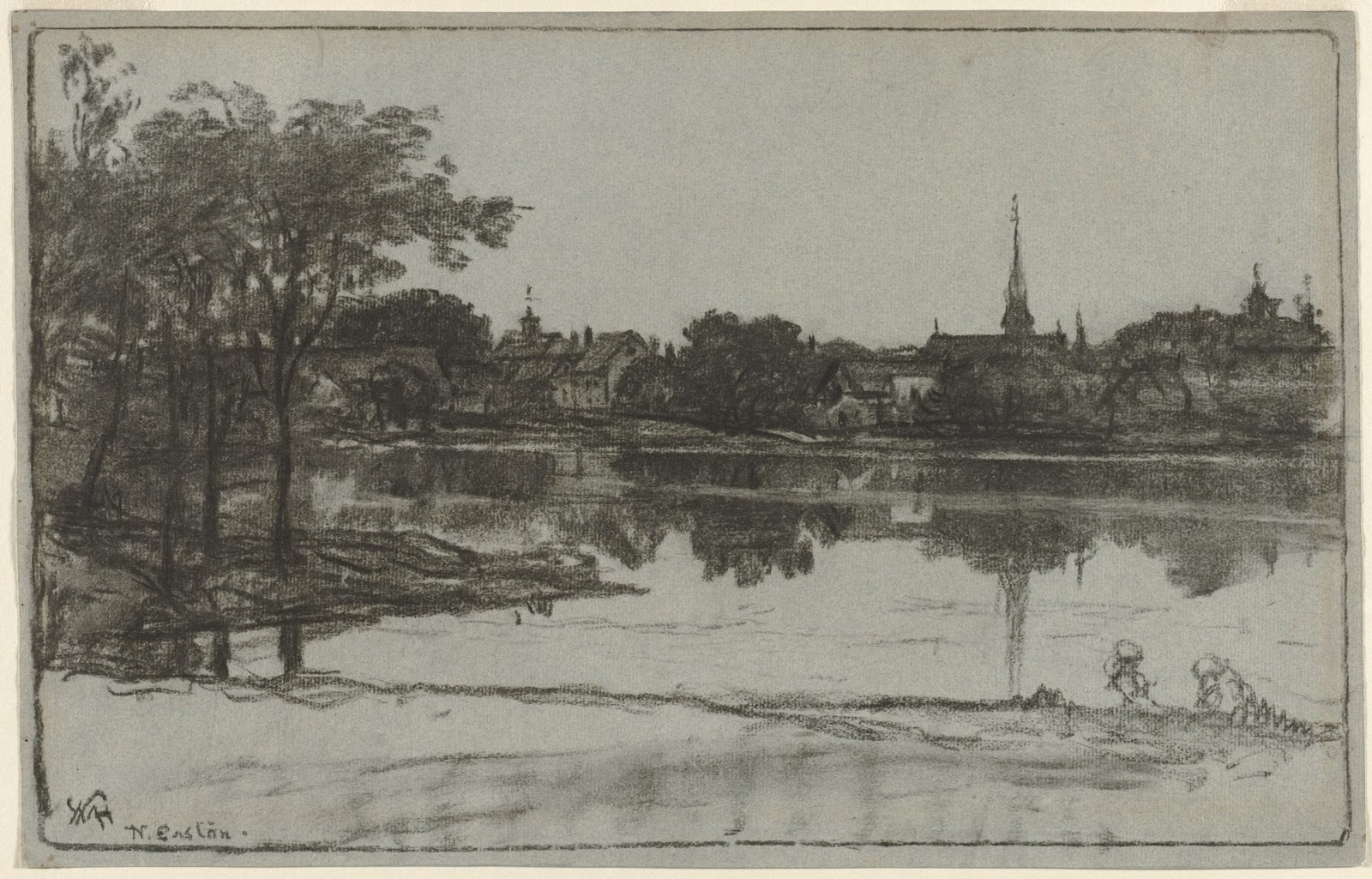
Borderland State Park was the country estate of Oakes Ames, a Harvard botanist, and his wife Blanche Ames, an artist and suffragist. The family began buying farmland in Easton and Sharon in 1906, built their stone mansion in 1910–1911, and lived there until the late 1960s. The Commonwealth bought about 1,300 acres in 1971 and opened the park in 1973. It has grown to 1,843 acres, and in 1997 most of it was listed on the National Register of Historic Places as the Borderland Historic District.
Borderland at a Glance
Before the Ames Family: Farms and an Ironworks
Long before the estate, this was farm country. DCR's management plan describes an eclectic group of farms here from the late 1700s to the late 1800s, raising everything from cattle to crops, and their stone walls and cart paths still run through the woods. Captain Ebenezer Tisdale, a Revolutionary War soldier, settled a family farm along Mountain Street in the mid-1700s; his grandson, Colonel Israel Tisdale, later built a new house on the site. George Wilbur built a farmhouse in 1780 that still stands, the oldest building in the park.
Industry came too. In 1825, Leach Pond was created by damming and cutting a cedar swamp to supply water to an ironworks in Easton, and DCR's records list the remains of a Briggs nail factory from about 1831. An engraved stone near the old season-pass lot, placed by the Easton Historical Commission in 1983, sums up the site's past: a bog iron operation, a reservoir for Easton's furnaces, early Easton homes, and a stone mansion. More on the water on the ponds page.
The Ames Estate in Easton
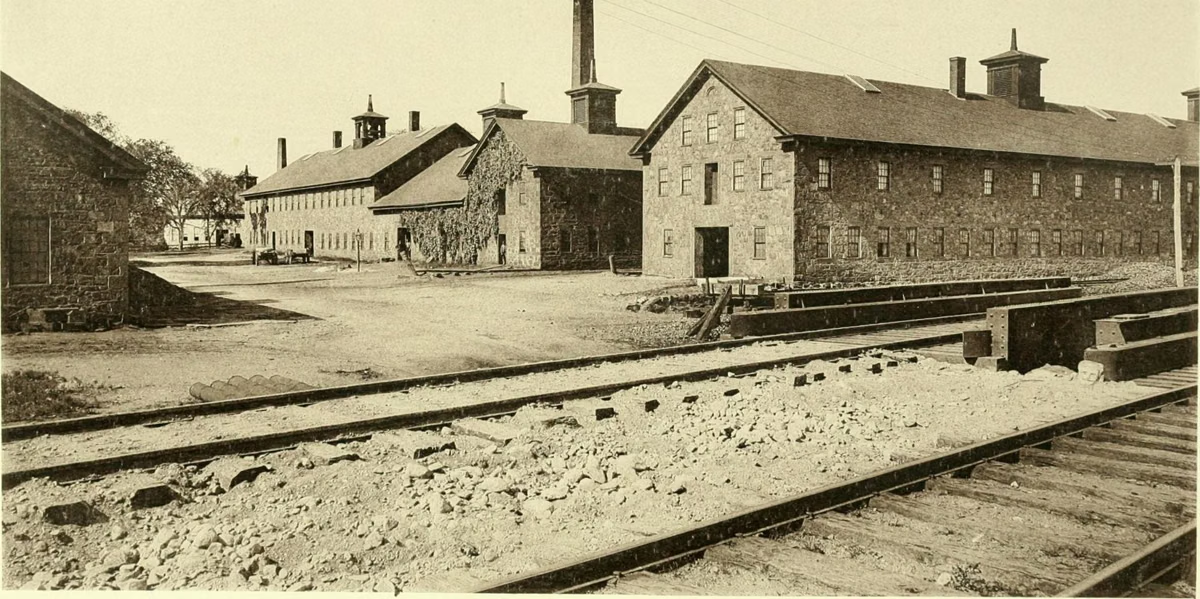
The Ames family's fortune came from manufacturing. DCR's plan says they made a shovel widely used in building the transcontinental railroad and were a major supplier to Union soldiers in the Civil War, with a large factory in Easton. In 1906 the family began buying farmland in the area. The first parcel was the Currivan Farm, and that is where they built the mansion and laid out the grounds. While they waited for the mansion, they lived in the old Tisdale farmhouse, which Blanche remodeled in the Colonial Revival style in 1906. (The village of North Easton has other Ames estates and buildings; Borderland is the one owned by the state.)
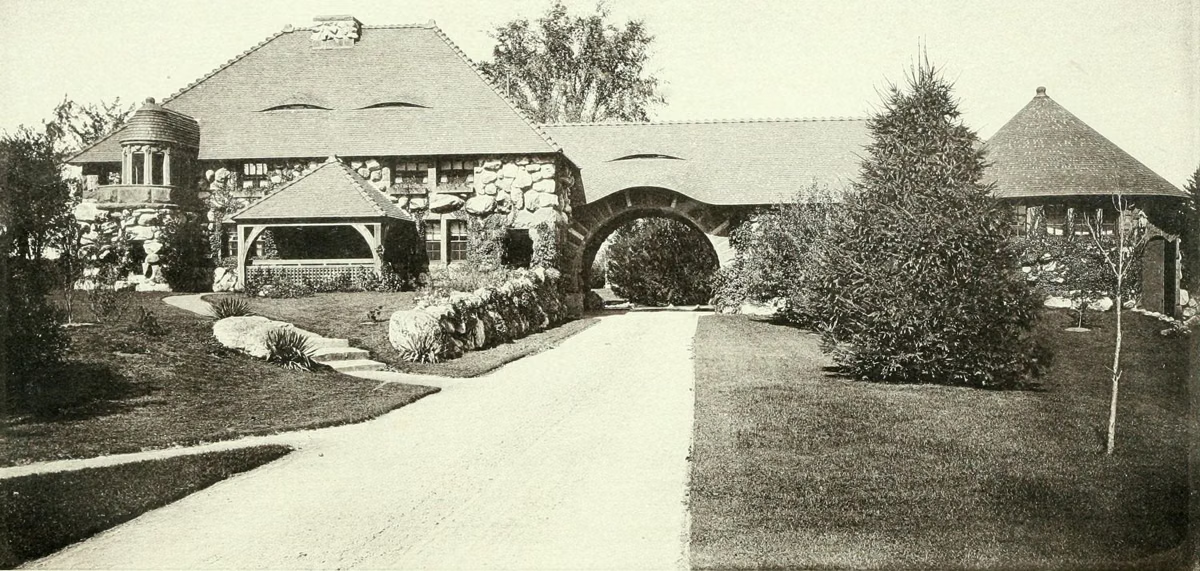
By 1910 they were building the estate: the stone mansion Blanche designed, a rock garden, a swimming pool, tennis courts, a shooting lodge on Leach Pond and the outbuildings to run it all, connected by carriage roads. Later they created Upper Leach Pond and Puds Pond with dams and dikes (DCR dates them to 1906–1939). DCR's plan credits the estate's high level of surviving original buildings and design as a reason for its National Register listing.
Oakes Ames
Oakes Ames was a Harvard botanist, and DCR's tour sheet says he is still considered one of the foremost orchid experts. He supervised Harvard's Arnold Arboretum from 1927 to 1935. His interest in plants shows in the grounds: DCR's winter guide points out ornamental trees around the mansion you won't find in the woods, such as American holly, sweet gum and yew, and DCR's plan notes that some non-native plants the Arboretum introduced to the U.S. were planted here.
Blanche Ames
Blanche Ames was an artist and botanical illustrator, in DCR's words, and an active suffragist whose political cartoons DCR shows on its women's rights tour. She designed the mansion herself. The couple raised four children at Borderland. In 2020, a crabapple variety named for her, Malus 'Blanche Ames', was planted at the park.
From Estate to State Park
In 1970 the family offered the state about 1,000 acres for a park; a state review warned that the park would be "severely crippled" without six more tracts, and in 1971 the Commonwealth bought about 1,300 acres. The Friends of Borderland say the family also donated the mansion's contents. People were walking the estate roads before the park officially opened in the summer of 1973. Land was added in the late 1970s, the mid-1980s, 1988 and 1993–94, and the visitor center opened in the mid-1990s with a 250-car lot.
In 1997, 1,270 acres of the park were listed on the National Register as the Borderland Historic District. A plaque by the mansion entrance records it. DCR renovated the mansion inside and out between 2009 and 2011, finishing around its 100th anniversary.
The Farmhouses Today
Two old farms inside the park are leased to private curators under DCR's Historic Curatorship Program, which trades long-term leases for restoration. The Smith farmhouse, near Lily Bay, was built in the late 1800s by a Dr. Smith, an Easton "clairvoyant healer." The Wilbur farmhouse from 1780 was under restoration when DCR wrote its 2017 plan, and the Ames family had bought it only in 1949. The Tisdale farmhouse burned in 1984; only its foundations remain. Near Rockland Street, the small walled William Dean Cemetery holds about 14 graves from 1815 to 1903.
Nature in the Park
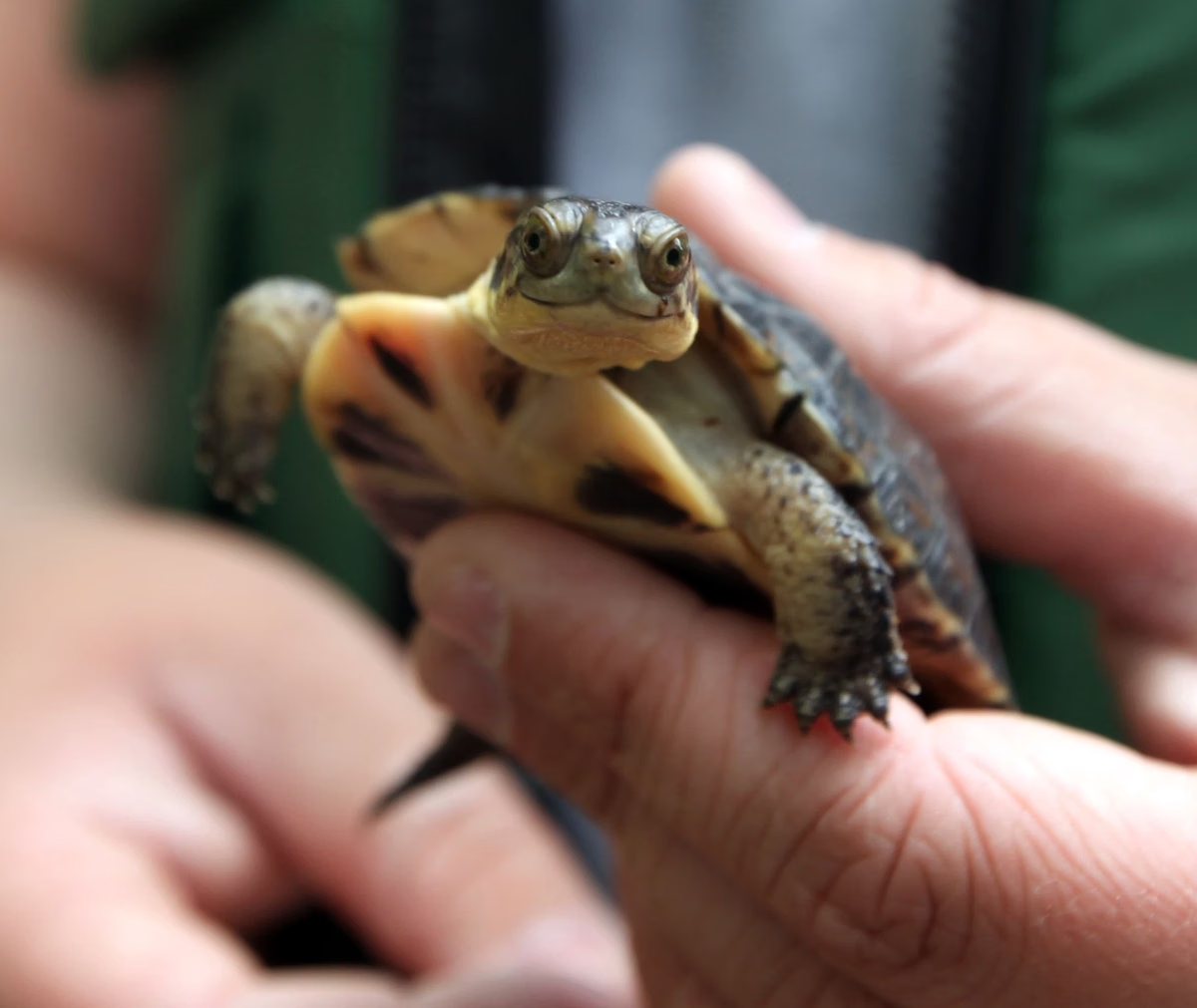
Today most of Borderland, about 70 percent by DCR's count, is upland forest of oak and pine, and nearly all of it is state-designated Priority Habitat. DCR lists four state-protected species here, including Blanding's turtle and eastern box turtle, and in 2015 began a multi-year project to raise and release young Blanding's turtles in the park. The park also sits in the Canoe River Aquifer Area of Critical Environmental Concern and straddles the Neponset and Taunton river watersheds.
History FAQ
Who owned Borderland State Park?
Oakes and Blanche Ames. The family assembled the estate from farms starting in 1906 and sold it to the Commonwealth in 1971.
Who was Oakes Ames?
A Harvard botanist and one of the foremost orchid experts of his time, who supervised the Arnold Arboretum from 1927 to 1935 and built Borderland with his wife, Blanche.
Who was Blanche Ames?
An artist, botanical illustrator and suffragist. She designed the Ames Mansion at Borderland and drew political cartoons for women's right to vote.
When did Borderland State Park open?
The state bought it in 1971 and it officially opened in the summer of 1973.
Why is it called Borderland?
DCR's materials don't explain the name. The park does sit on borders: the Easton–Sharon town line and the Bristol–Norfolk county line both run through it.
Is Borderland State Park on the National Register?
Yes. In 1997, 1,270 acres of the park were listed as the Borderland Historic District.